Still
I recently reconnected with an old friend.
Over the years we’ve kept in touch through a group text thread and the occasional phone call, but the last time we laid eyes on each other, Eli was alive.
He greeted me with a big hug, the kind you give when you haven’t been in the same room with someone you love in a long time, and know they need it.
We sat down and caught up on work, mutual friends, and the status of our favorite sports teams.
After a few minutes, he asked, “How are you?”
This question is not an easy one to answer, and I’ve learned to really listen to how it’s asked so I can respond accordingly.
In this case, it wasn’t a customary, routine version of “How are you,” where I could simply say, “I’m okay, how are you?”
This was the version that bravely acknowledged the grieving elephant in the room. I watched my old friend shift forward in his seat and lean across the table to get closer to me. He emphasized the word “you,” and delivered the question with such concern and love, it was obvious he not only wanted to know, but understand.
He gave me a gift, and I answered honestly.
“Thanks for asking,” I said. “Every day is hard. I’m trying, but I miss my old life, really miss Eli and I’m sad.”
“Still?” he said.
Conversations can change quickly when grief enters the chat.
Still.
It’s a word I never thought much about.
Not moving or making a sound. Motionless. Unmoving.
“Seeing the still body of my 20 year-old son.”
Deep silence and calm.
“The still of the night, when you’re alone with your thoughts.”
Up to and including the present or the time mentioned.
“He’s dead, and I’m still learning how to live without him.”
Eli was never still.
As a 20-year-old, he realized he danced a lot and said it was because he liked to move and just couldn’t help it.
As a toddler, he’d wake up at 6:00am, bounce into our bedroom with sleep in his eyes, grab my arm and drag me out of bed pleading, “Daddy, come and play with me!” He didn’t stop moving until his head hit the pillow 13 hours later.
Physical touch was his love language. When he snuggled, you’d get the full force of his legs, arms and body blanketed around, over and on top of you. He’d sit on your lap, hold your hand, jump on your back, massage your head, hug you tight.
Even sitting still on the couch, he wasn’t really sitting still. He had a hand on your arm, a leg thrown over yours, some part of him always making contact.
At the dinner table, he and I sat next to each other, across from Nan and Jesse.
He always seemed to be facing me, invading my space. He’d stand, lean touch, talk, tickle, tease and banter.
It was never relaxing.
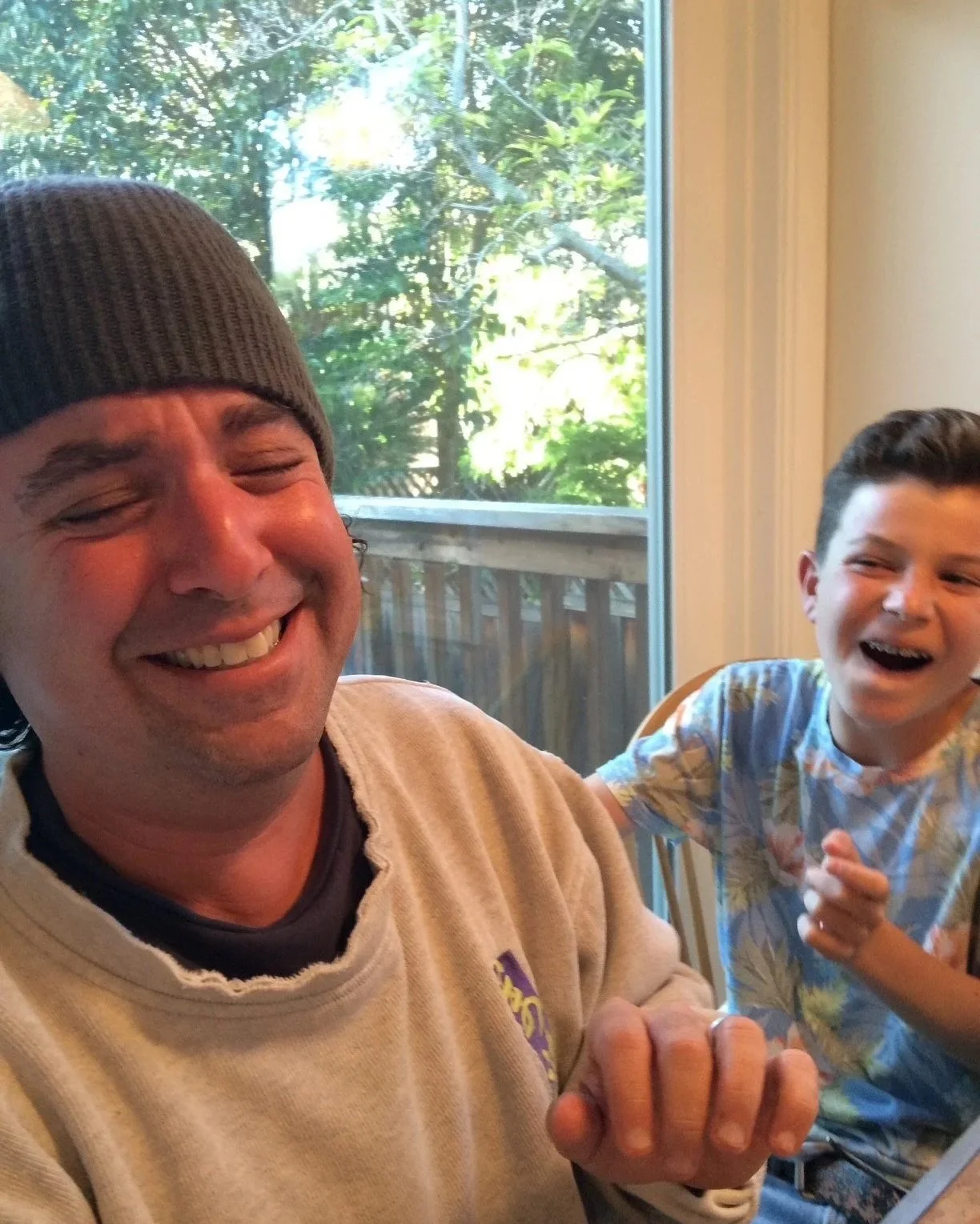
It was chaotic and hilariously fun and annoying and comfortable and I loved every second of it.
“Still?”
I looked back at my old friend who was trying, really trying to connect with me.
I took a deep breath, didn’t say what I was thinking, (Are you suggesting I should be over it by now?) and instead, told him I didn’t think the sadness would ever go away, and I was learning how to live with it.
He nodded, averted his eyes, and I talked more about my grief and Eli and how everything was different.
He listened, asked questions, and listened some more. He also shared the pain he was going through in his life, and I listened, asked questions and listened some more. An hour later, with tears in our eyes, we said goodbye.
I gave him the kind of hug you give someone who really needs it, and thanked him for identifying the grieving elephant.
It’s safe to say that in our 30+ year friendship, we never had a heart-to-heart like this one.
It was messy and infuriating, honest and beautiful, painfully sad and hopeful.
On the drive home, I realized I felt something I hadn’t expected: good.
Not because the grief was lighter, but because for an hour, someone had actually let me say it out loud.
Most people who know what I’ve lost work hard to avoid the subject, terrified of saying the wrong thing, of making me sad.
What they don’t understand is that I’m already sad. Bringing up Eli doesn’t make it worse.
It makes me feel less alone.
Still, these conversations don’t happen enough.
But when they do, it makes me feel like he’s still here.
March 2024